Monsters Still Stalk Me: The Magic that Stokes my Mysteries
Hello, All Readers.
Autumn and its magic approach!
Being a shy kid, I made good friends with books. But I was also lucky enough to grow up with fog-shrouded castles, moonlit forests, prowling creatures, and times when every night and day felt like Halloween. Please journey with me, and I will lay all the magic before you.
In the late 1950s, Universal Studios in Hollywood began releasing for television their 1930s and ’40s horror classics, seen before only in theaters—Dracula, Frankenstein, The Mummy, and The Wolf Man. Oh, my. I was hooked. These weren’t just movies to me. They were portals! As a child, I didn’t so much watch these films as enter them. And in many ways, I never left.
DRACULA, starring the enigmatic Hungarian actor, Bela Lugosi, captivated me. But so did his castle in Transylvania’s Carpathian Mountains. There was something irresistible about it with its enormous battlements, cobweb-choked staircases, meandering, candlelit corridors, velvet-draped rooms, and ancient, tarnished splendor. Was I frightened? No! I saw all of it as invitations to discovery. I imagined tiptoeing throughout the many floors, towers, and rooms of the castle by day while the vampire slept. I brushed my hand along the cold stone walls, covered with centuries of portraits. How many of those depicted were also vampires? I listened for the flutter of Count Dracula’s black cape as he rose from his coffin at dusk in chambers far below. This was a setting that was alive—more accurately, the living dead—a place where anything could happen. That sense of atmospheric possibility is something I still chase in my mysteries.
FRANKENSTEIN and its four sequels, the first three movies starring the iconic Boris Karloff as the monster, had mountaintop laboratories. They showed me a world where strange things happened: lightning crackled to reanimate dead tissue as machines, among which I hid, hissed and sputtered. Science felt like magic there as my eyes bugged out. I feared not the monster since I pitied him but the consequences that could come from a story of creation with its careless science, rush to power, and dark secrets! And I learned that characters don’t have to be perfect to be compelling. Those that are flawed, scarred, misunderstood, or different can form the truer heart of a story. Such lessons color every character I create.
THE MUMMY and its iterations, starring a linen-wrapped Boris Karloff and later, the brooding actor, Lon Chaney, Jr., sparked my curiosity about Egypt: Its ancient tombs, hidden chambers, arcane burial rites, and hieroglyphics made me want to solve mysteries. I became an Egyptologist, brushing sand off a forgotten artifact and watching for asps and cobras as I entered cursed tombs. I was thrilled by the mystery more than by the monster! That childhood fascination is why I sometimes include puzzles, codes, clues of course–and snakes!–tucked inside everyday places in my books.
THE WOLF MAN, made famous by Lon Chaney, Jr. as the werewolf, enthralled me the most! His ancestral home, Talbot Castle in fictional Llanwelly, Wales, from which the monster would emerge on his nightly, full-moon forages for human blood and flesh, was intriguing enough. But the estate was surrounded by a foggy forest, covered with blackened trees twisting skyward, poison wolfbane blooms, and gypsy encampments where palm reading and magic charms to ward off evil spells could be had. I didn’t fear any of it. It enchanted me! I wanted to soak it up and explore everything. I pictured myself stepping into the forest’s moonlit clearing as autumn leaves crunched under foot. Lantern lights flickered in the woods. Why? There was a thrill in not knowing what was behind the next tree! This movie taught me that mystery isn’t just about clues. It’s about mood, tension, sometimes lunar radiance, and the delicious darkness. When I write nighttime scenes for my young readers, I’m channeling that sense of eerie wonder from the forests of Talbot Castle.
***BTW, please watch for my October Blog where I will take you on an in-depth tour of my imagined childhood at Talbot Castle from The Wolf Man.***
These worlds, compliments of Hollywood, continue to shape my mysteries! The fabulous horror films entertain but also deeply imprint within me that:
- Atmosphere matters
- Shadows are invitations
- Mystery is emotional and desired
- Unusual characters are unforgettable
- The world is full of secret doors!
The following timeless emotions bridge my childhood and my stories today! Even if young readers haven’t seen the old Universal horror films, they can understand the feelings behind them:
- The thrill of exploring places that seem forbidden
- The curiosity to discover something hidden
- The importance of considering consequences before taking actions
- The excitement of not knowing what comes next
- The enchantment that empowers from embracing imagination with abandon
- The gift of empathy for characters who don’t quite seem to fit in
So, get a clue, dear readers. When I write for kids, I’m not recreating horror; I’m recreating magic—the magic of stepping into worlds that feel bigger, stranger, and more exciting than my own! May your imaginations and their magic feed your lives and art as they still feed mine. I hope you’ll make the Universal horror classics must-watch movies this autumn! And if you’re like me, those walks through the portals will dazzle you far beyond Halloween.
-

- Universal Studios Clapperboard by cottonbro studios
-
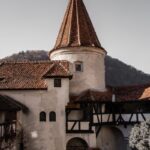
- Bran Castle (called Castle Dracula) in Romania’s Transylvania region by Marius Gabriel
-

- Frankenstein Family by Daisy Anderson
-
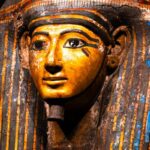
- Egyptian Mummy Case by Ayman Mahmoud
-
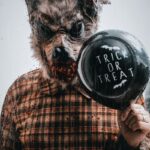
- Wolf Man Trick-or-Treating by Lisa Fotios






 Here, to date, is “The Joseph System” for doing that:

